
Welcome to my Substack
Reporting on good intentions and unintended consequences, through a libertarian lens.

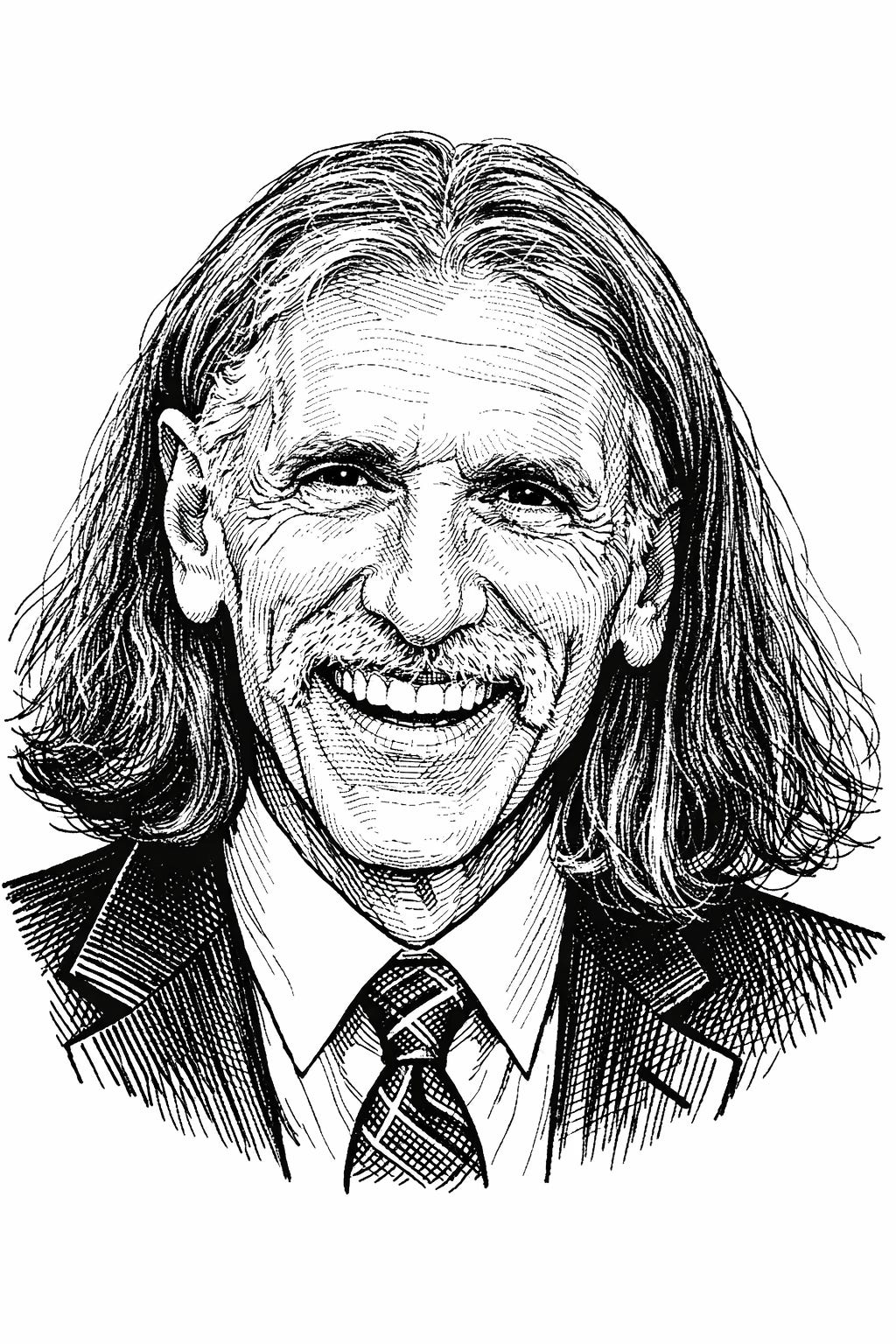
Welcome to my Substack. It’s called The Best Laid Plans. Here’s my story.
“The best laid plans of mice and men oft go awry.” – Robert Burns, To A Mouse, 1785, after a farmer’s plow inadvertently destroyed the mouse’s nest.
“The curious task of economics is to demonstrate to men how little they really know about what they imagine they can design.” – Frederich A. Hayek, Nobel Prize-winning economist, The Fatal Conceit, 1988.
“Mission accomplished,” President George W. Bush, aboard the USS Abraham Lincoln, on May 1, 2003, more than a decade before the last U.S. soldiers left Iraq.
More than half a century ago, I gave a speech at my high school graduation denouncing the Vietnam War. (It was met with lusty boos.) As a freshman at Yale, I protested the New Haven murder trial of Black Panther Party chairman Bobby Seale and his associates. The next year, I picketed with workers who went on strike against the university. Later I contributed to a socialist newspaper called In These Times. I thought of myself as a man of the left.
In the decades that followed, I voted for Democrats, listened to NPR and read The New York Times. Nearly all of my friends and family are liberals or progressives. So are my neighbors: In Montgomery County, MD, where I live, about 75 percent of voters cast their ballots for Kamala in 2024.
Not me. True confession: I voted for Chase Oliver, the Libertarian candidate for president.
It’s been a long time coming but I’m done with the orthodox left.
Democrats reflexively look to the government to solve problems, real or imagined. Republicans, in thrall to a power-hungry despot, are worse.
I remain as committed as ever to making the world a better place. But I have come to believe that capitalism, free markets, individual liberties and limited government will bring us closer to a world that is more peaceful, prosperous and just. It won’t be a perfect world – there will be inequality and suffering, as there is today – but it will be better than the world we have now.
My evolution from lefty to liberal to libertarian was shaped by my experience as a reporter for newspapers and magazines more than 50 years, as well as by lots of reading and study. Only recently, for example, did I learn that the massive protests against the Vietnam War did not by themselves end the draft, which caused great anxiety to young men of my generation. Libertarian economist Milton Friedman, who was then advising the White House, helped to persuade Richard Nixon that it was just and feasible to replace conscription with an all-volunteer army.
Conscription, libertarians say, is a form of slavery — temporary for most, permanent for the soldiers who don’t come home from a war.
Libertarians strongly oppose wars of choice like the one the US is waging now. They opposed the ill-fated American wars of aggression in Vietnam, Iraq and Afghanistan, in part because wars opens the way to power grabs by those in charge. Civil liberties were trampled in the US during both world wars and during the so-called war on terror after September 11.
Libertarians share other important beliefs with the left, making my transition easier than you might imagine. Libertarians have opposed the Drug War as ineffective, unfair and immoral. They want to curb the power of police and prosecutors and lock up far fewer people. They supported gay marriage before it became fashionable. They believe, as leftists do, that big government is more likely to serve the wealthy and powerful than it is to serve the poor.
Immigration is a big issue for libertarians and for me. In a perfect world—one with less tribalism and nationalism—people would be free to live where they wish. Even now, permitting more people from poor countries to come to the US would be good for them and good for most of us as well.
Libertarians, like liberals, are appalled by Donald Trump. His declaration at the 2016 Republican convention – “I alone can fix it” – might be the least libertarian statement ever made by an American candidate for president.
To be sure, libertarians and liberals part ways on big questions. Most libertarians oppose public schools, public libraries, Social Security, national parks, gun control, the minimum wage, rent control, zoning laws, occupational licensing and a host of other policies and programs beloved by progressives.
I’m not a doctrinaire libertarian, by any stretch. I don’t want to live in a country without national parks, public libraries or safety nets for the poor or the sick. Only collective action can address global problems like climate change.
But I intend to write from what I regard as a libertarian perspective. Or, if you prefer, through a libertarian prism. By that, I mean an approach that is deeply skeptical about the effectiveness of centralized planning and places a high value on personal freedom. Unlike many of my friends and neighbors, I have faith in the power of capitalism to do good; government and nonprofits, not so much. I’ll take Amazon and Tesla over the post office and Amtrak, any day.
F.A. Hayek, the economist, philosopher and guiding spirit of libertarians, attributed the persistent failures of central planning to what he called the knowledge problem. The information needed to solve big problems, he argued, is inaccessible to lawmakers, politicians, bureaucrats and self-styled experts because it is dispersed among millions of individuals whose needs and desires are constantly changing; the list of big-government failures in my lifetime is long. Markets, by contrast, take into account the voluntary actions of millions to create what Hayek called a spontaneous order that enables our amazingly complicated world function as well as it does. Miracles happen, like the production of a pencil.
Put simply, Hayek taught humility. The road to hell is paved with you know what. Unintentional consequences lurk everywhere. To avoid them, we should recognize and learn from our mistakes.
My hope is that together we can get smarter about how to make the world better, even when, inevitably, we disagree.
To that end, here are a few of the topics that I intend to explore here:
Tobacco policy: I’ve reported extensively on tobacco and nicotine issues since 2020. I’m going to keep at it because the goal of reducing the deaths and disease caused by cigarette smoking fits a neat framework created by the effective altruism movement: It is important, tractable and neglected. Sadly, Michael Bloomberg, the billionaire philanthropist whose arrogance is Trumpian, leads an effective global effort designed to prevent people who smoke from choosing safer ways to obtain nicotine, such as e-cigarettes and nicotine pouches. (I wrote the first draft of this post in Mexico, which has just banned e-cigarettes, under his influence and that of the WHO.) Bloomberg’s ill-advised and unethical crusade is leading to more death and disease, not less.
Psychedelics: Mental health problems abound in the US. But regulators have been slow to recognize the potential of psychedelic medicines to help people who suffer from PTSD, depression, anxiety and addiction. It’s tragic that young American men who go to war in distant lands and come home with PTSD then need to travel to Costa Rica or Mexico to get the treatment they deserve. I plan to write about why everyone should have access to MDMA, my favorite recreational drug. The 1970s feminist classic Our Bodies Ourselves had it right: People should have the freedom to put whatever they like into their bodies so long as they do no harm to others.
Philanthropy: The world of Big Philanthropy is shaped by highly-educated, well-paid experts who wield elaborate theories of change from lxuxury offices on the coasts. Major foundations spend billions of dollars with little accountability. Few foundations and nonprofits measure their impact, disclose their failures or share what they have learned. It’s shameful.
One of my favorite charities, GiveDirectly, is an exception: GiveDirectly sends cash to the world’s poorest people and trusts that those people know how to spend it well. It has delivered $1 billion in cash to more than two million people since 2009 and evaluates itself rigorously. I wrote about GiveDirectly in 2018 for the New York Times and plan to check back with them soon for this Substack.
Even so, we should try to keep in mind that capitalism, markets and trade have done more to reduce global poverty than all the foundations and nonprofits in the world combined, and it’s not even close. Economic growth in the global south, supplemented by social welfare programs made possible by that growth, has lifted about 1.5 billion people out of extreme poverty since 1990, according to Our World in Data.
Upcoming posts will look at the public health problem that Democrats refuse to see, the deleterious impact of rent control and the future of the Kennedy Center. My hope is that together we can get smarter about how to make the world better, even when we disagree.
We live in perilous times, as I’m sure you know. Millions of Americans fear a vast, powerful federal bureaucracy that operates with few restraints, at home and abroad.
Of course we need to replace this president and elect a Congress that carries out its responsibilities. But we need to do more.
High on the agenda should be the task of limiting the size, scope and power of the federal government. We need to restore the liberties that have been taken from us and eliminate the thicket of obstacles that stand in the way of economic growth.
Many lessons can be drawn from the reign of Trump. Among them is that a central government with great power — the power to wage war without constraint, disrupt the global economy, reward friends and punish enemies — is a terribly dangerous thing.
I'm really looking forward to your content! I am mainly familiar with your work in tobacco harm reduction, but agree with pretty much everything else you said here. I've always had libertarian leanings and that has only been reinforced by seeing how much can go wrong with policy.
Marc: I am also flunking retirement, so I can relate. I appreciate your thoughtful efforts to look more deeply into ways to respond to our current govermental mess. Standard conservative and liberal approaches have not yielded great results.